
Authored by: Eve Gleeson, ShareAction; Alexandra McPherson, Clean Production Action; Arthur van Mansvelt, Achmea Investment Management; Caroline Boden, Mercy Investment Services
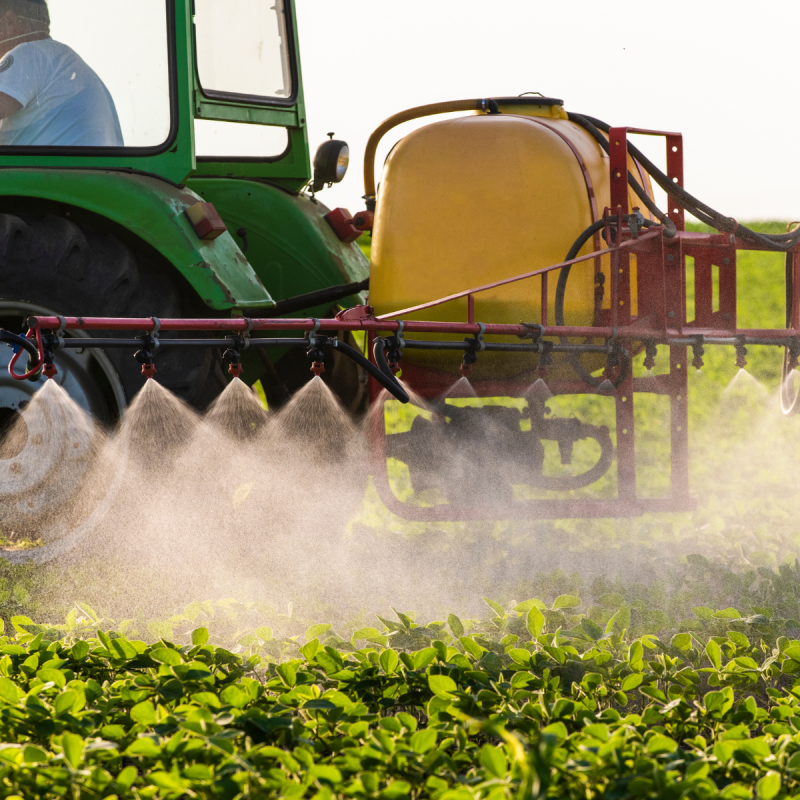
Chemical pollution is evolving from an environmental concern into a systemic financial threat. Traditional business models are now buckling under the weight of trillion-dollar health liabilities, stranding once-reliable assets. To navigate this shift, institutional investors must use proactive company and policy stewardship to lead the transition toward a non-toxic economy.
The costs of chemical pollution are staggering.
Over 3,600 synthetic chemicals have been found in human bodies. Exposure to substances like pesticides, PFAS, phthalates, and bisphenols is linked to various health issues, including cancer, neurodegenerative disease, and infertility. The resulting economic burden of just these four chemical groups is staggering, costing the global economy between USD 1.4 and 2.2 trillion annually in healthcare expenses alone.
Pollution is a primary driver of biodiversity loss and is eroding the 'free' ecosystem services that underpin the economy, from water purification to crop pollination. In Europe alone, the bill for purging PFAS from our environment is set to exceed EUR 1 trillion.
Investors can no longer afford to leave chemical risk unpriced.
German pesticide giant Bayer has become a cautionary tale in mispricing chemical risk. Since the 2018 acquisition of Monsanto, Bayer has already lost over USD 11 billion to cancer lawsuits over its glyphosate-based herbicide Roundup. The financial strain of this is acute: Bayer expects to spend nearly USD 6 billion in payouts in 2026, requiring a USD 8 billion loan to manage the losses. Bayer is now lobbying for federal protections at the state level and through an ongoing Supreme Court case that could shield the entire sector from similar liability.
Bayer’s pesticide-related woes are shared by competitors. Pesticide giant Syngenta is halting production of its herbicide, paraquat, following an estimated hundreds of millions of dollars in settlements over links to Parkinson’s disease.
Meanwhile, the crisis surrounding PFAS is estimated to cost the global economy USD 17.5 trillion annually. Industry giants are already folding: 3M committed to exiting PFAS manufacturing in 2022 after a USD 12.5 billion settlement with U.S. water systems, while DuPont faces ongoing costs after a USD 1.185 billion settlement in 2023.
PFAS is one of the most significant environmental litigation issues in history, with over 15,000 active lawsuits in the US alone.
“When health and environmental liabilities are finally recognised, they can trigger sudden write‑downs, higher financing costs and stranded assets for companies that have not planned a credible transition.”
- Planet Tracker’s Thalia Bofiliou
Laws and markets are moving against toxic chemicals
Public pressure is accelerating retailer action on chemicals: over 25 US retailers have a safer chemicals policy aiming to avoid chemicals of high concern in products. Thirteen major US food retailers have already established pesticide reduction policies, including Walmart and Kroger, which now require Integrated Pest Management (IPM) standards for 100% of their fresh produce. In the UK, supermarkets are banning some hazardous pesticides from their supply chains.
This shift is likely to affect chemical producers as well: the market for biologicals - lower-impact, natural pesticides - is projected to grow by 117% by 2035, more than double the growth rate of conventional chemicals.
Across sectors, investors are engaging with companies on chemical pollution among increasingly clear transition risks.
“As investors who provide equity and debt to upstream and downstream actors in this value chain, we have a critical role to play in this transition.”
- Caroline Boden, Director of Shareholder Advocacy, Mercy Investment Services
Governments are also addressing environmental and health risks from chemicals, although action is consistently watered down by chemical industry lobbying.
The EU still has its sights set on a 50 percent reduction in pesticide use and risk by 2030. EU-wide limits on PFAS in food packaging take effect in August, while the European Chemicals Agency (ECHA) is advancing a near-total restriction on PFAS. In the UK, the new Labour government launched its first Pesticides National Action Plan in a decade, bolstered by a commitment to ban emergency neonicotinoid use. Canada has deemed the entire PFAS class as toxic, initiating a phased withdrawal, while the United States is seeing a wave of multiplying state-level bans on PFAS in food packaging. As of early 2026, 40 U.S. states have adopted 415 policies regulating hazardous chemicals.
Despite some momentum, widespread regulatory backtracking continues to generate undiversifiable systemic risks for investors. The Global Biodiversity Framework (GBF) and the Global Framework on Chemicals (GFC) should be treated as regulatory North Stars: the GBF’s Target 7 specifically mandates a 50 percent reduction in pesticide risk by 2030, while GFC Target A7 aims to phase out Highly Hazardous Pesticides (HHPs) by 2035.
Crucially, GFC Target D3 explicitly calls on the finance sector to integrate sound chemical management into all financing approaches by 2030.
"The investment sector should call on governments to reconfirm the GBF goals and develop consistent and credible regulation that facilitates investments in the chemicals transition.”
- Arthur van Mansvelt, senior engagement specialist at Dutch firm Achmea Investment Management.
What can investors do?
Investors can act now to reduce portfolio exposure to chemical risk, strengthen engagement with companies, and shape global policy framework implementation.
- Sign the Chemicals & Biodiversity Investor Statements: Investors can sign two statements: one for chemical companies and one for policymakers (calling for implementation of global frameworks). They are already backed by more than 45 investors representing over USD 4 trillion in AUM.
- Integrate Chemical and Pesticide Risk into Stewardship: Investors should assess the risks of companies exposed to hazardous chemicals in their value chains and use stewardship levers including engagement to improve transition to low-impact business models that are resilient to regulatory and legal headwinds. Collaborative engagement opportunities: ShareAction Pesticides Working Group (covers pesticide producers); Investor Environmental Health Network (covers downstream users of chemicals and pesticides); ChemSec Investor Initiative on Hazardous Chemicals (covers global chemical producers); NatureAction100 (covers numerous sectors on nature)
- Engage with the UN Global Framework on Chemicals: A finance sector working group has been launched to propel the finance sector’s adoption of the framework. Investors who engage now can influence how the finance sector’s role is defined. Once the framework is set, the cost of catch-up will be higher. Please reach out if you want to join.